1928
Born in Buffalo, New York
James Donald Wilson is born on January 2, 1928. His family later moves to Detroit, where artistic influences surround his early life.
Explore the Archive
Explore the Archive
The Legacy of James D. Wilson
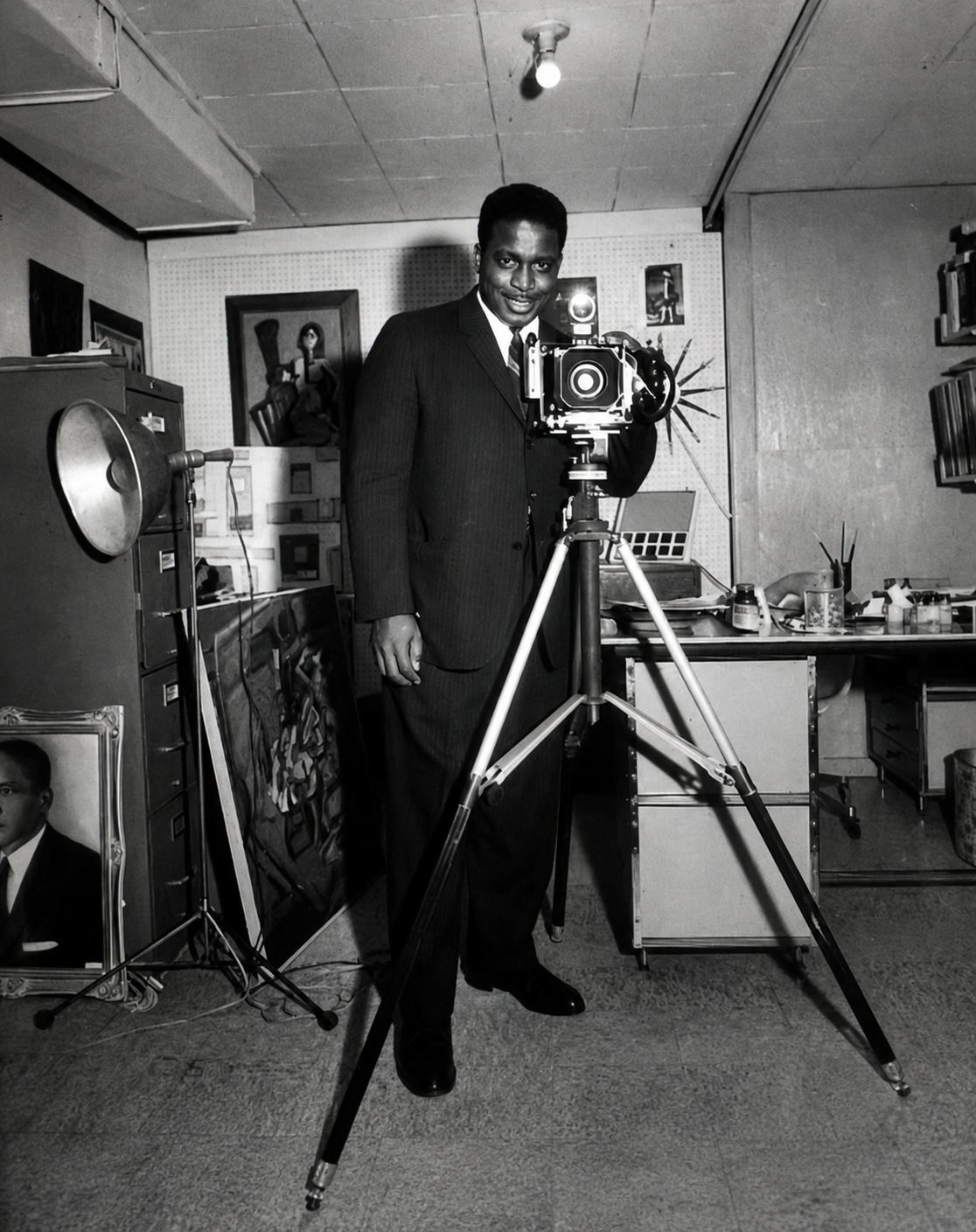
Biography
Born in Buffalo, New York, Wilson later moved with his family to Detroit where artistic influences surrounded his early life. Art was not simply a profession in his world. It was a language, a responsibility, and a way of preserving identity.
Following studies at Northern High School, Wilson pursued higher education and eventually earned a Bachelor of Science degree in Art Education and later a Master of Arts degree in Photography from Wayne State University.
Wilson began his photographic career with The Michigan Chronicle, one of America's most influential Black newspapers.
Through his camera he documented artists, neighborhoods, churches, civic leaders, educational institutions, architecture, social movements, and nationally significant cultural figures.
Timeline
James Donald Wilson is born on January 2, 1928. His family later moves to Detroit, where artistic influences surround his early life.
Studies at Northern High School in Detroit shape a young artist's eye. Photography becomes a language, a responsibility, a way of preserving identity.
Wilson begins his photographic career as staff photographer with The Michigan Chronicle, one of America's most influential Black newspapers — documenting Detroit life, street by street.
Malcolm X. Martin Luther King Jr. The Motown era. The 1967 Detroit uprising. Wilson's camera stands inside the defining moments of a generation — protests, marches, NAACP gatherings, and the music that became the soundtrack of America.
Teaching photography, humanities, drawing, sculpture, and visual arts. Wilson becomes a full-time professor at Wayne County Community College, helping shape generations of students. On the steps of the Detroit Institute of Arts, he stages and photographs historic gatherings of Detroit's Black artists.
Wilson receives his Master of Arts degree in Photography from Wayne State University in June of 1980 — a milestone of perseverance, witnessed by his daughter.
International work in Nigeria and Liberia. Lectures on Black photographic history and Africentric approaches to photography. Identity, exploration, history.
Later photography, mentorship, and the quiet work of the archive — thousands of negatives, prints, and writings carefully preserved for a future he believed in.
James D. Wilson passes on December 4, 2002, in Southfield, Michigan. The archive he leaves behind waits, protected, for its rediscovery.
The James D. Wilson Historical Photography Archive is established to preserve, protect, and activate his extraordinary body of work for generations to come.
Philosophy
For Wilson, photography was never about proximity to fame. It was about preserving truth. He believed images were not decoration, but declaration — that beauty existed everywhere, and that the extraordinary and the ordinary deserved equal attention.
The Educator
Wilson taught photography, humanities, drawing, sculpture, and visual arts, becoming a full-time professor at Wayne County Community College, where he helped shape generations of students.
He brought students into his world — staging portraits, finding light, honoring subjects, telling stories. He trained leaders, built systems, and mentored future artists across multiple generations.
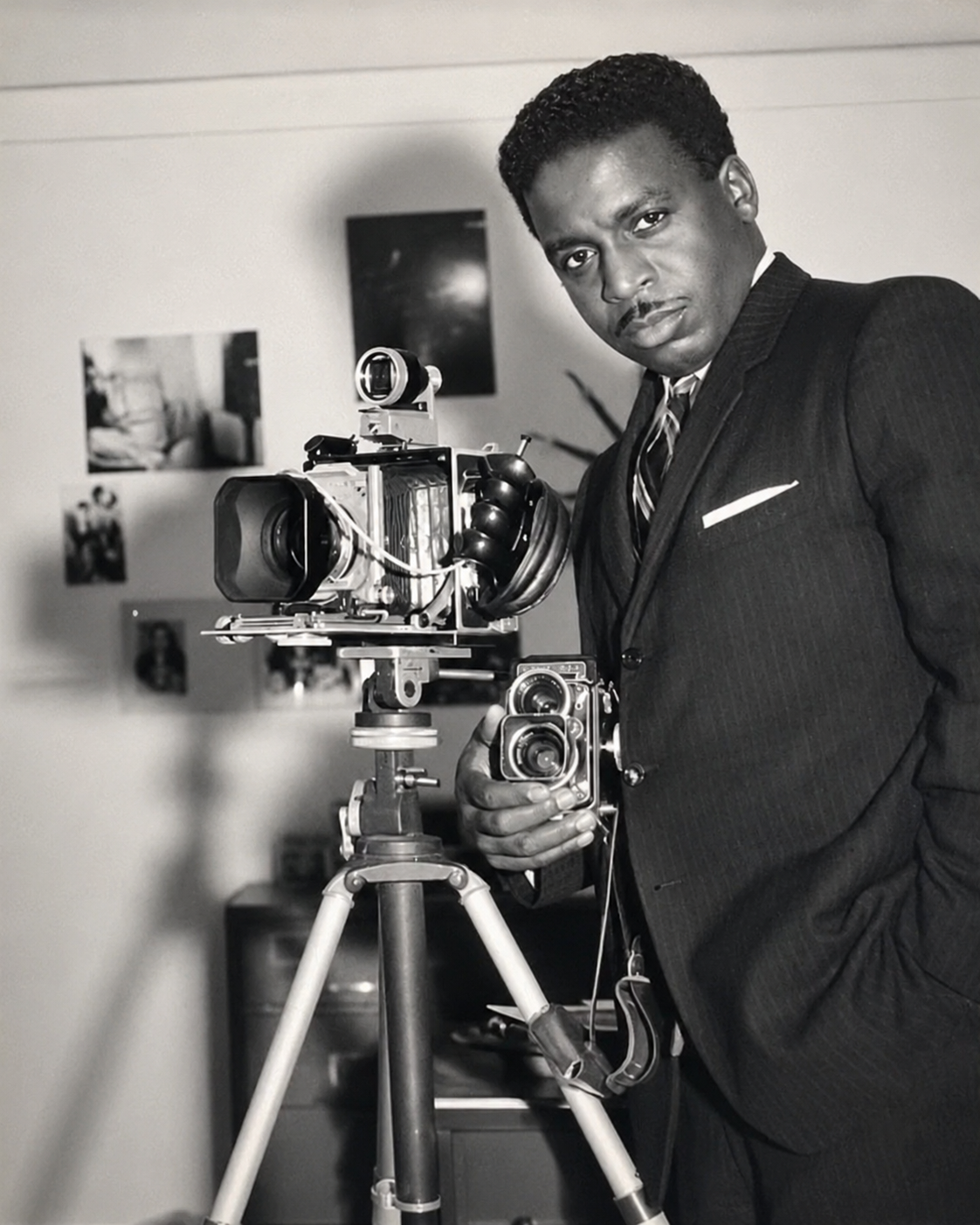
Humanities + Arts Instruction
His educational journey reflected his belief that learning itself was sacred — Northern High School, Wayne State University, Indiana University, and years of training in photography, human relations, group dynamics, and education.
He carried that training into humanities classrooms, drawing studios, and photography labs, building darkrooms into every home he owned and treating the developing process itself as an act of devotion.
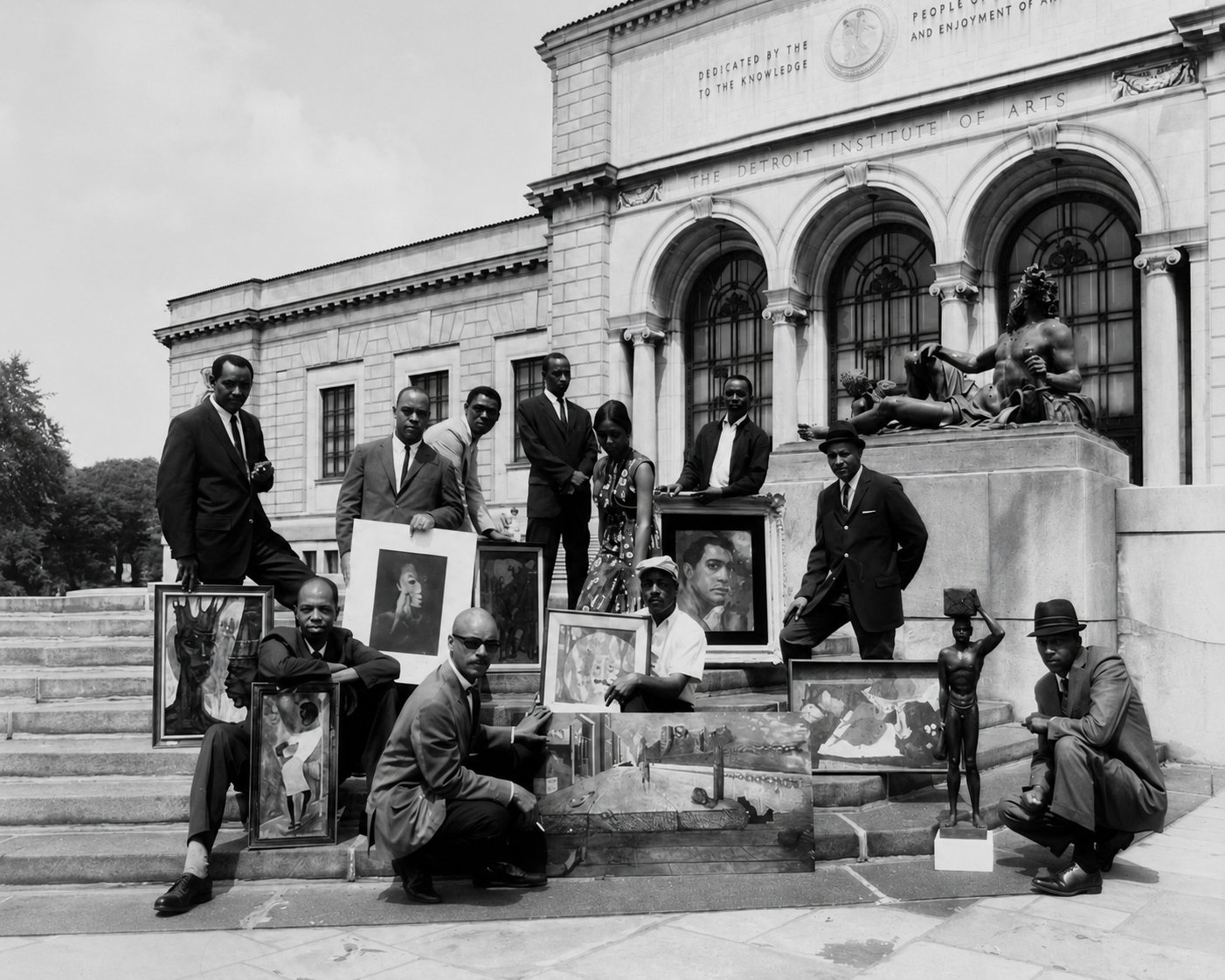
Black Arts Movement
Through Arts Extended Gallery and his involvement with Detroit's artistic community, he dedicated himself to expanding the world's understanding of Black artistic genius.
On the steps of the Detroit Institute of Arts, he staged and photographed gatherings of Detroit's prominent Black artists — powerful images declaring:
We are here.
We have always been here.
We belong in every institution.
He documented what many believe was among the first major Black art exhibitions held at the Detroit Institute of Arts. He believed artists deserved visibility. He believed culture deserved preservation. And he spent his life helping both happen.
African Journey
Wilson's vision crossed oceans. His international work in Nigeria and Liberia, his Africentric photography scholarship, and his lectures on Black photographic history were acts of identity restoration — connecting Detroit's story to a global one.
Travel photography, historic research, Black humanities, and Afrocentric writings form a layered record of exploration that the archive continues to preserve and study.
A Daughter Remembers
Some inherit photographs.
Some inherit stories.
Some inherit responsibility.
For years much of my father's extraordinary work remained protected inside boxes, negatives, files, and archives quietly waiting to be rediscovered.
As time passed, I realized I inherited more than photographs.
I inherited responsibility.
Responsibility to preserve not only his work—but his vision, contribution, and voice.
Family Legacy
The archive is stewarded today by his daughter, Michelle B. Wilson — daughter, storyteller, and steward of the James D. Wilson Historical Photography Archive — who travels the world producing stories seen by millions, carrying forward every instinct her father gave her: to look closely, to find human truth, to believe every life is worth documenting.
Why This Archive Exists
The James D. Wilson Historical Photography Archive exists not only to preserve this extraordinary body of work, but to activate it — through exhibitions, licensing, publications, documentaries, educational initiatives, and future immersive experiences designed to bring history to audiences around the world.


Bring Detroit history into your home through rare photography, curated collections, museum-quality prints, and iconic moments captured through the lens of
James D. Wilson
From Black Detroit history and Motown legends to rare cultural moments, discover images that preserve stories, spark conversation, and honor a legacy.